Book: Angels and Demons by Dan Brown Food: Goat Cheese and Arugula Pizza
I reread Angels and Demons when my daughter, Lilly, and I decided to travel to Italy for her college spring break since Rome was one of our destinations, and the book is set in Rome. It was so much fun picturing the places and events in the book that I shipped a copy off to Lilly. She also loved the book and we determined that the destinations in the book would guide our tour of Rome, though keeping other tourist sites on the itinerary as well.
In the fictional story, Robert Langdon determines that the Illuminati, a secret society long-thought to be extinct, has returned to destroy the Catholic Church. He races against time to save four kidnapped Cardinals as well as the Church. He must solve clues based on the scientific elements earth, air, fire, and water and in the sculptures of Bernini, a prominent 17th century sculptor who also may have been a member of the Illuminati. These clues put Langdon on the Path of Illumination which he must follow to uncover the truth.
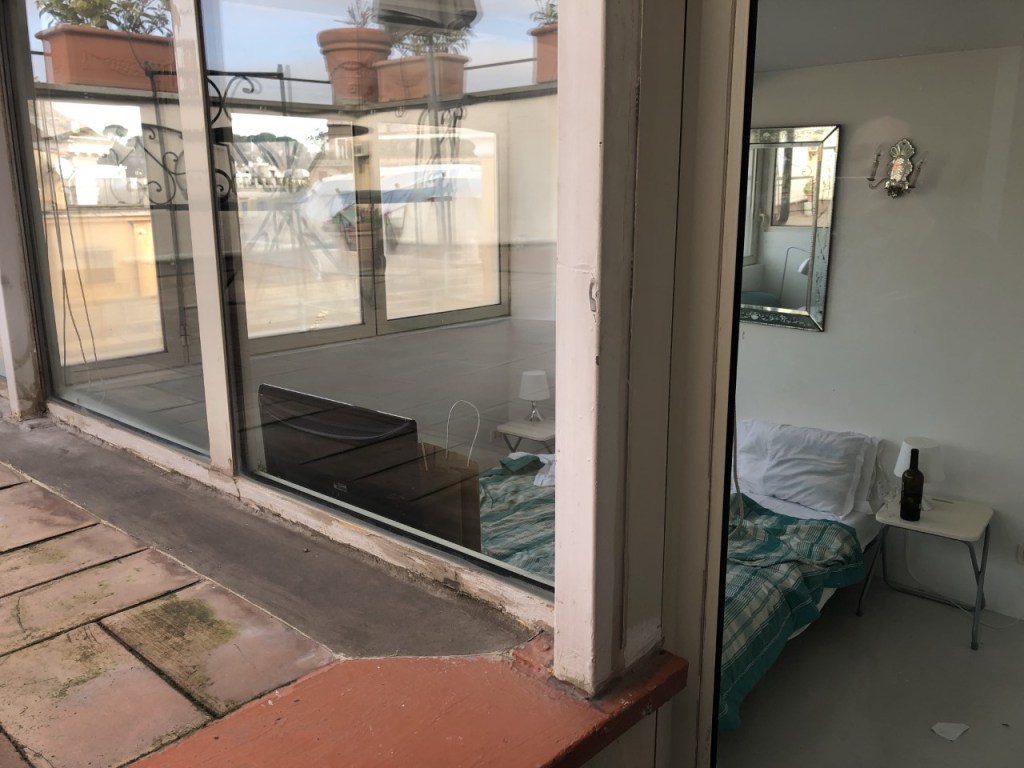
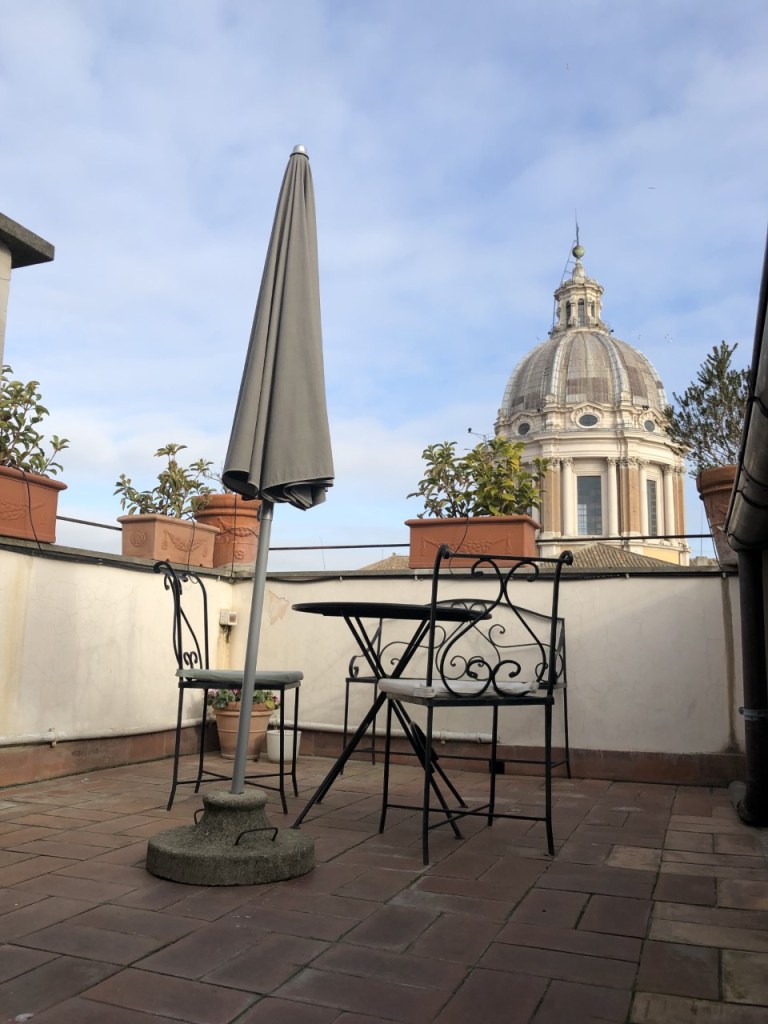
We reserved an Airbnb near the Spanish Steps in the middle of Rome so we could walk to most of the sites we wanted to see. It was a tiny studio apartment with just enough room for a double bed, two tiny bedside tables, and a small table with two chairs. The mini-kitchen was in the closet, and the bathroom would fit inside most American sized showers. It was on the top floor and the elevator did not go all the way up so we used steps and a spiral staircase to climb the last two stories. But, it had several things going for it. It was clean, it was on budget ($100/night), it was in the Historic Center of Rome, and (this was the clincher) it had an outdoor rooftop patio with a view of the city.

In the book, Langdon crisscrosses Rome as he follows the Path of Illumination. His order was 1) Pantheon 2) Church of Santa Maria del Popolo 3) St. Peter’s Square and Basilica 4) Church of Santa Maria della Vittoria 5) Piazza Navona 6) Castel Sant’Angelo 7) The Vatican and St. Peter’s Square (again). Following this path would have us going back and forth across the ancient city. We decided we would instead follow a path based on the proximity of one site to another, building in the other sites we wanted to see. I present them in the order Lilly and I toured them so our tour can be replicated if anyone is interested.
But first, breakfast. Rome is full of great food so we set out and kept our eyes open for a place that seemed to have a lot of local patrons. We found a tiny cafe with room for about eight people, and a robust business of locals grabbing food to go. The cappuccinos were delicious and the pastries were as scrumptious as they were beautiful.

After breakfast we started walking toward our first destination enjoying the lovely weather. The thing about Rome you must understand is that everywhere you turn there is some stunning statue or building or bridge that could be a tourist site almost anywhere else, but in Rome it’s just part of the landscape. So as we walked we encountered the Fontana del Palazzo di Giustizia Lungotevere, or the Palace of Justice, which is the home of the Supreme Court and the Judicial Public Library. In a dramatic understatement we decided, “it’s worthy of a photo.”

Following the Tiber River we found our first Angels and Demons destination, the Castel Sant’Angelo, which is actually the last destination in the book and a secret meeting place for the Illuminati.
About a century after the death of Christ, Roman Emperor Hadrian built this impressive structure to be a mausoleum for himself and his family – thus it’s other name: Hadrian’s Tomb. However, over the centuries things happen. It was looted by Visigoths and attacked by the Goths. Eventually, in the 15th century, it became the property of the Catholic Church and a tunnel was added connecting it to the Vatican. Initially it was used as a papal fortress and residence, but over time was also used as a prison and execution site. It is currently the Museo Nationale di Castel Sant’Angelo and tickets are available to tour the site. The line was a couple hours long and we had other things we wanted to see during our two days in Rome so we skipped the tour and just enjoyed it from the outside.


We had tickets to tour the Vatican the next day, but, as were were so close, and as St. Peter’s Square and the rest of Vatican City play a prominent role in Angels and Demons, we decided to check out the square which was the site where Langdon found a murdered Cardinal and the clue for the element, air.
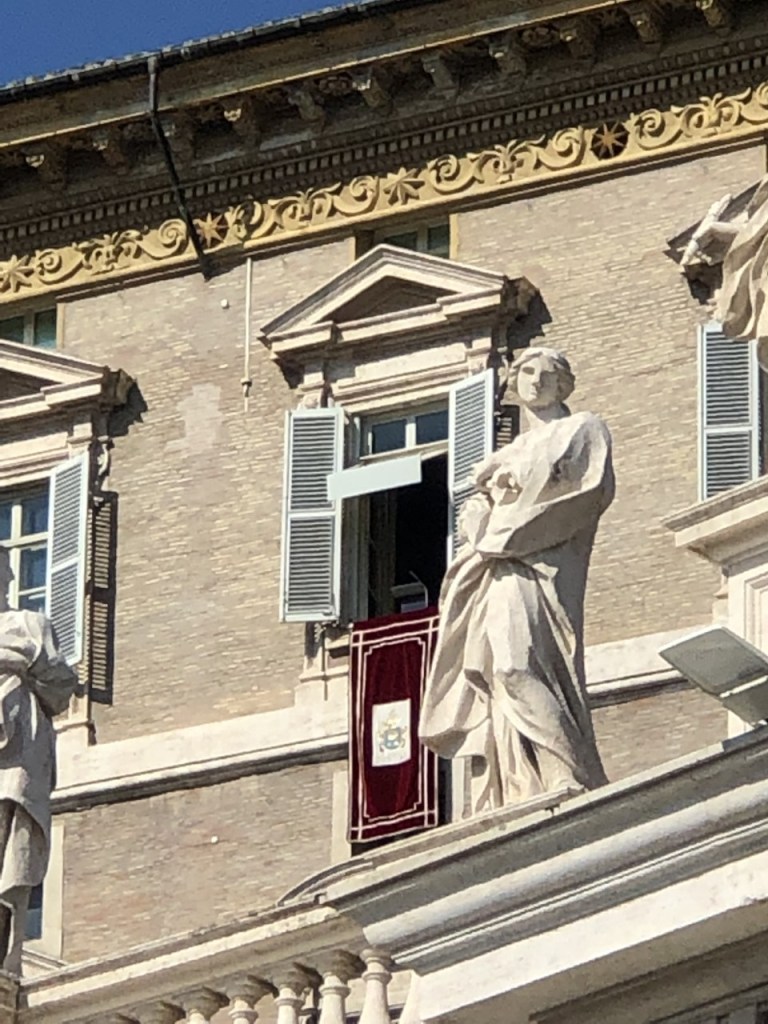
Jet-lagged and on vacation, we forgot it was Sunday. When we got there the square was packed and there was someone talking in Italian over a loudspeaker. Everyone was looking in the same direction so Lilly took off to figure out what was going on with me in hot pursuit. She circled around one part of the crowd, dodged through another, wove through some pillars, went through a metal detector and some guards, and popped out on the square not far from where Pope Francis was just finishing delivering a sermon! Though we couldn’t understand the language, and are not Catholic, it was still cool! I like Pope Francis. We only saw him for a moment because the second his sermon ended he gave a blessing and disappeared. I managed a photo of the Papal Cloth, hung from a window while the Pope appears there, before it disappeared an instant later. We also enjoyed people watching in the square and the children dressed as mini popes or mini Swiss Guards.


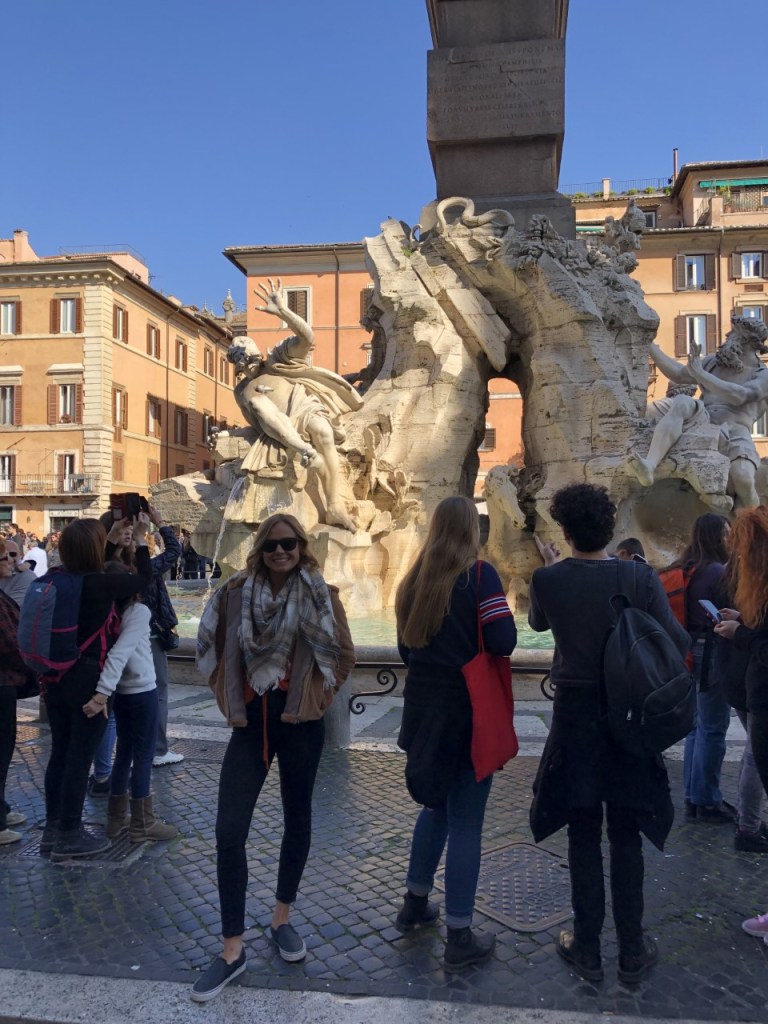
Next up, the Piazza Navona with the Fountain of the Four Rivers (sculpted by Bernini). This was the site, in Angels in Demons, representing the element water. Langdon rushes to save a Cardinal from being drowned at this site. The dove at the top of the obelisk in the center of the fountain points the way to the next location on the Path of Illumination.
The Piazza Navona was originally built in the 1st century for athletic contests and chariot races. This gives you an idea of it’s size – approximately 4 blocks long by a block wide. A few years earlier, on my first visit to Rome, this Piazza was filled with artist tents and all varieties of art for sale. This trip, it was just a large and lovely square filled with locals and tourists enjoying the day.
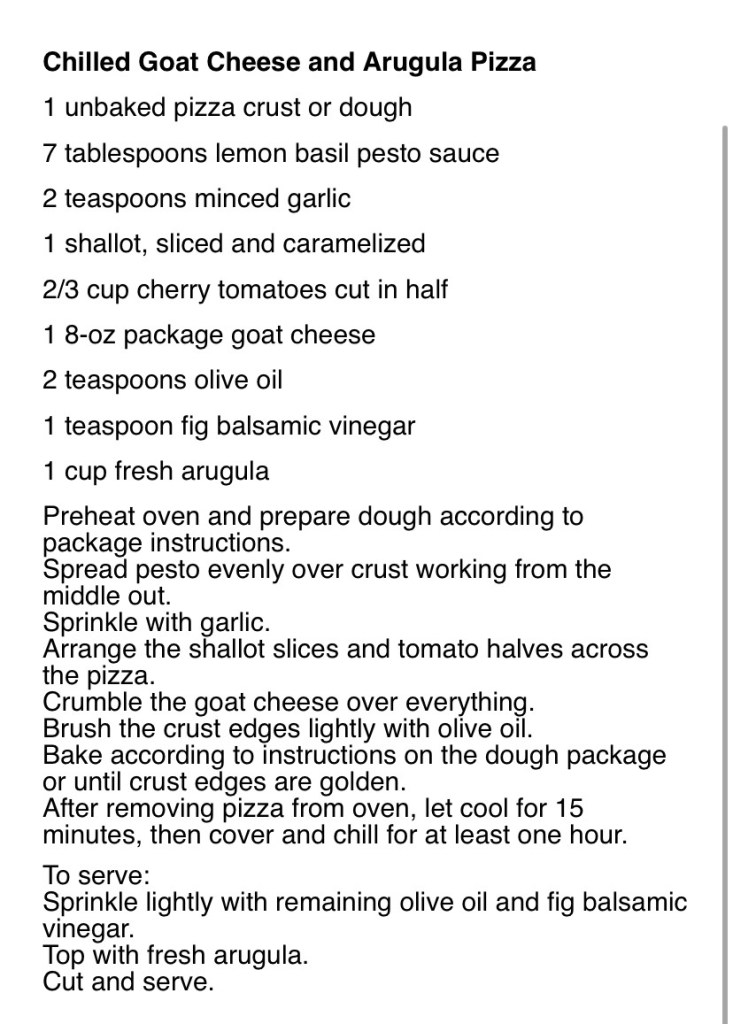
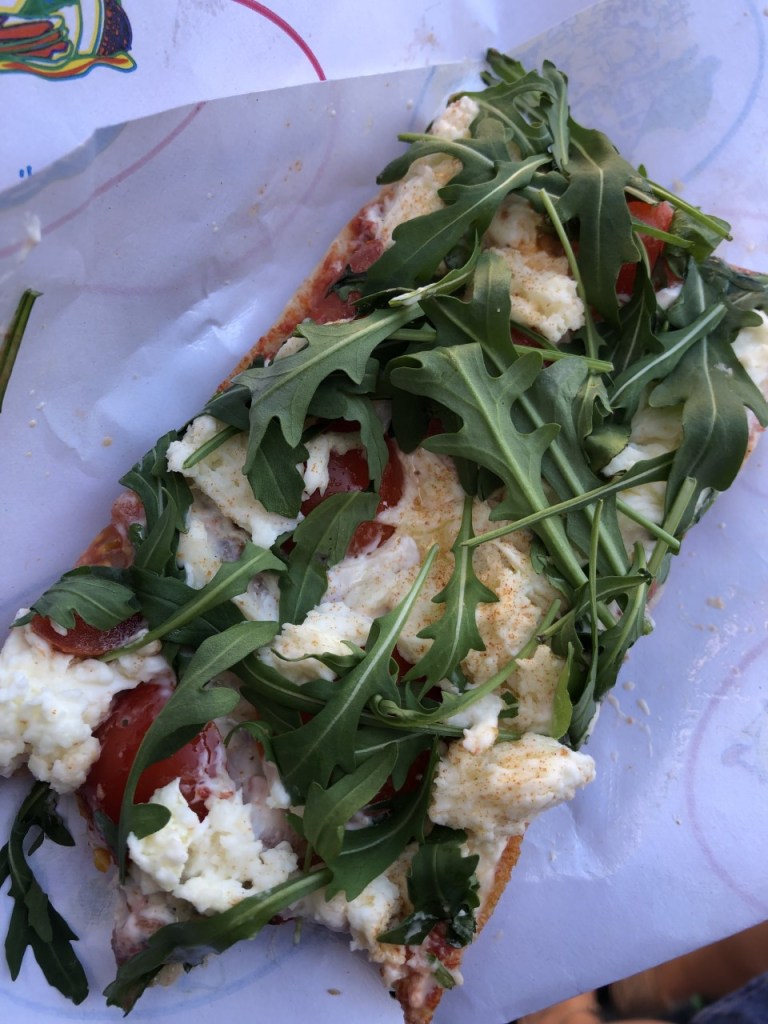
It is only a couple blocks between Piazza Navona and The Pantheon, our next destination. The pedestrian only streets between the two are lined with small shops and restaurants. The smell coming from a pizza shop lured us in. The shop was filled by the pizza oven and display counter with just enough room to step up into the shop, view the display, order, pay, and go back out. But, oh, those pizzas on display! You order by the slice and the owner pops the slice back into the pizza oven just long enough for it to be piping hot. With one exception, which I found. I ordered the goat cheese and arugula pizza. While Lilly’s slice came out of the oven steaming, the owner simply handed over my choice – cold. With an internal shrug of “well do as the locals do” I took my pizza with hidden disappointment. Until I bit into it. As we walked away from the shop Lilly, immensely enjoying her slice, hesitantly asked how mine was. “AMAZING!” Studying my face to see if I was joking and sporting a confused look she asked, “Really? Can I try it?” She took a small bite and all confusion disappeared. “Oh! My! Gosh! This IS amazing! Um, Mom, do you think we could share both slices?”
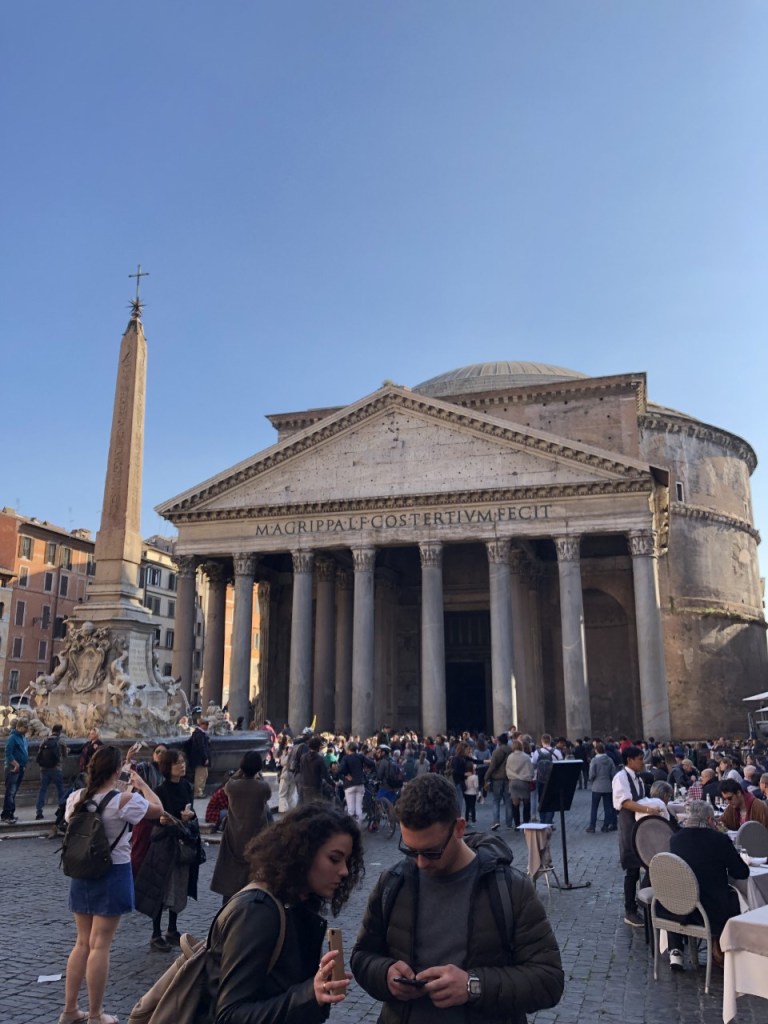
In Angels and Demons, a clue leads Langdon to the tomb of painter Raphael which is inside the Pantheon. However, he figures out this is a mistake, that he is not looking for the actual tomb of Raphael, but instead a chapel designed by Raphael with a tomb in it.
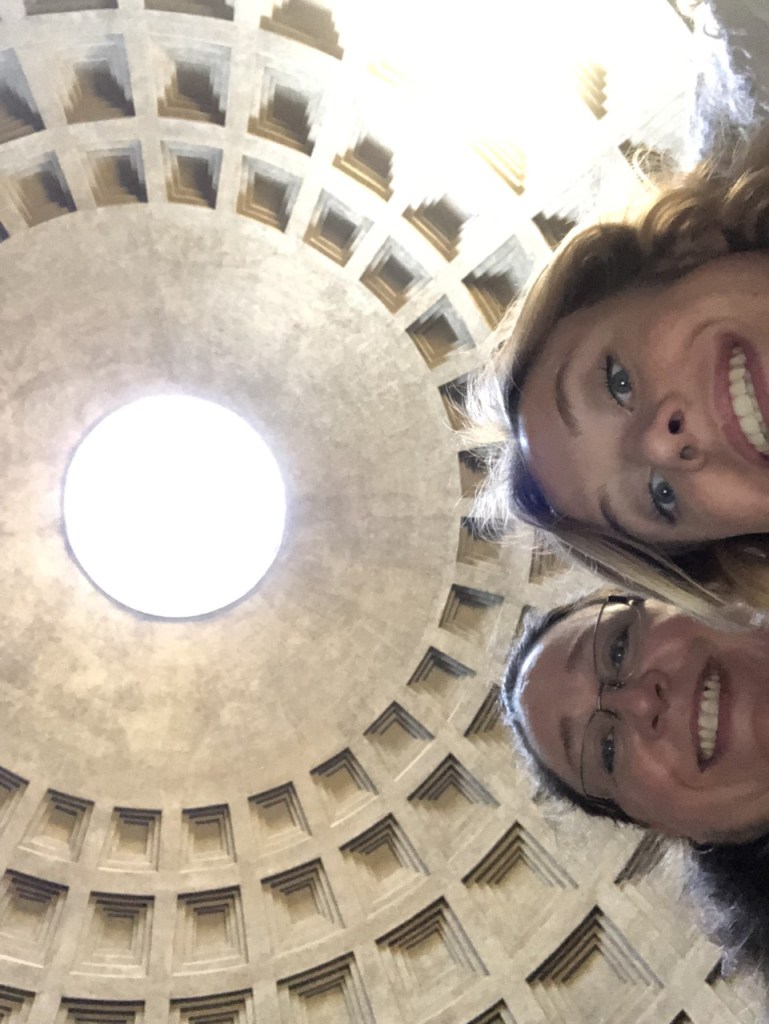
The Pantheon is one of the oldest buildings in Rome, dating back before Christ, and is topped by the world’s largest unreinforced concrete dome. The oculus (hole) at the top was an engineering marvel for the times (actually still is). It fascinated Lilly and me. The hole provides the light for the interior. It also allows rain through onto the floor and has been doing so for 2,000 years. But then what? Where does the water go? A slight slant to the floor guides it to small, almost unnoticeable holes in the marble floor, which lead to drainpipes under the floor. Another engineering feat. Originally commissioned by Emperor Augustus to serve as a temple to all Roman gods, it was later given to Pope Boniface in the 7th century and has served as a Catholic Church ever since.

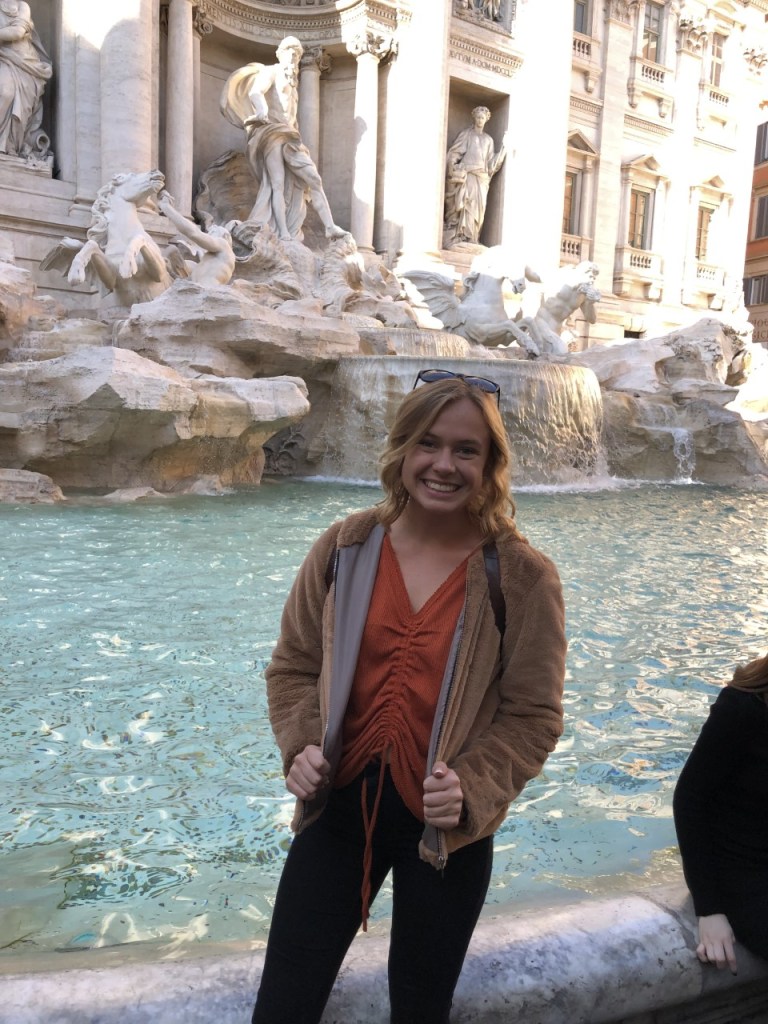
The Trevi Fountain lies between the Pantheon and our next Angels and Demons stop so we took a break from the story and stopped to enjoy this famous fountain. The fountain is massive standing 85 feet high and 65 feet across. Legend has it that if you throw a coin into the fountain, with your back to the fountain, over your left shoulder using your right hand, it ensures a return to Rome. About 3,000 Euros are tossed into the fountain every day which are collected each night and donated to a charity that supports programs for the needy.

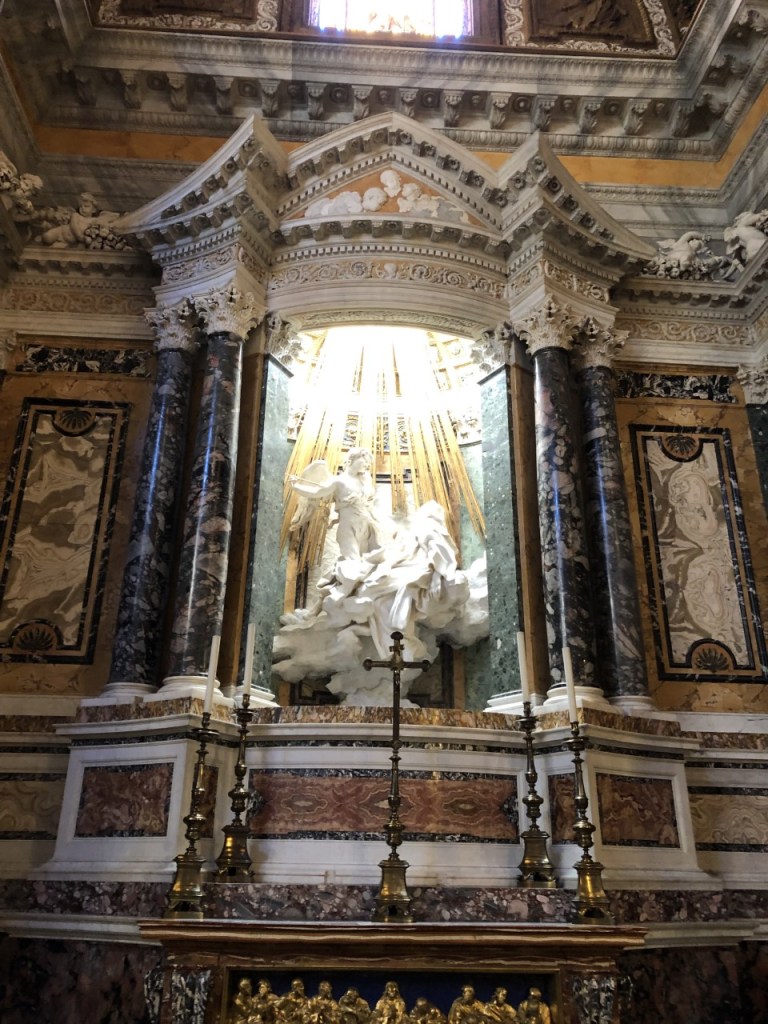
Back to our Angels and Demons tour, next up was the Church of Santa Maria della Vittoria where another Bernini sculpture, The Ecstasy of St. Theresa, is found. The element here is fire. Langdon is, again, too late to save the Cardinal but he does help save the church from burning to the ground.
The Church of Santa Maria della Vittoria is not known for anything other than the Bernini sculpture, but the sculpture and the beauty of the interior make it worth a visit.



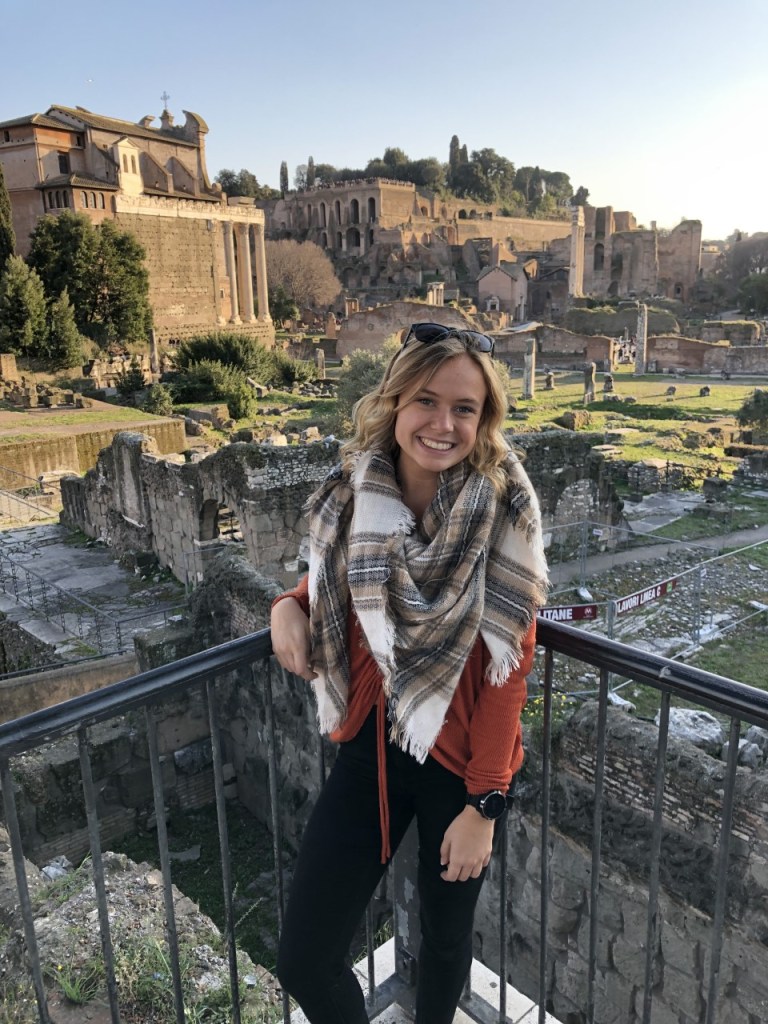
Taking another break from the Angels and Demons tour, we walked to the Roman Forum and the Colosseum. The Forum is an ancient rectangular plaza, originally a marketplace, surrounded by the ruins of ancient government buildings. It was built over three centuries starting in 29 BC under the rule of Emperor Augustus.
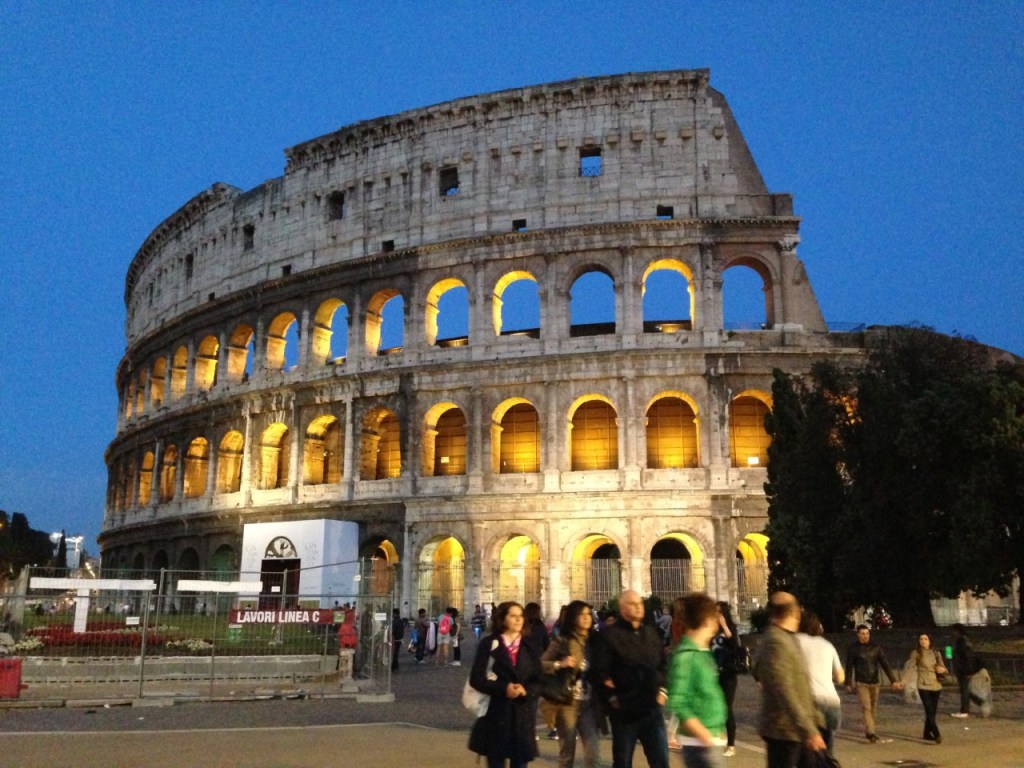
The Colosseum was built in AD 72 around the same time as the fall of the Second Temple in Jerusalem (AD 70) when the Romans destroyed the temple and much of the city to put down Jewish rebellion. It is believed 60,000 Jewish slaves were imported and used to build the Colosseum. This was also the same time that Christianity was spreading and gaining a foothold. The Colosseum was built for gladiator contests and public spectacles including mock sea battles, dramas, animal hunts, and executions including executions of Christians who were beginning to be seen as a threat to the Roman Empire.
Tours are available at both the Forum and the Colosseum, but due to our tight schedule we just viewed them from outside.
We caught a subway, directly across the street from the Colosseum, to our final destination for our Angels and Demons tour. We had worked our way across historic Rome from the Castel Sant’Angelo on the northwest side to the Colusseum on the southeast side. Our last Angels and Demons site was the Church of Santa Maria del Popolo back on the north side of the city.
If you recall, Langdon goes to the Pantheon looking for Rafael’s tomb and realizes he made a mistake. He figures out his real destination is the Chigi Chapel inside the Church of Santa Maria del Popolo. This chapel was designed by Raphael to be the tomb for the Chigi Family, thus Raphael’s Tomb. Here, Langdon figures out the element, earth, is represented by the dirt under the chapel in the crypt. He is too late to save the Cardinal but the chapel is full of Illuminati symbols and the Bernini sculpture, Habbakuk and the Angel, which points Langdon to the next destination on the Path of Illumination.
The paintings that cover the ceilings and walls of the Chigi Chapel are considered the best remaining examples of Raphael’s work. In addition to Bernini, there are several other well-known artists who contributed to the interior of this church and whose works are still on display including two exquisite works of Caravaggio: The Conversion of St. Paul and the Crucifixion of St. Peter.


Our day of exploring Rome wound down as we walked back down the hill to the Spanish Steps which were actually built with funds bequeathed by a French diplomat. However, because the Spanish Embassy was at the bottom they became known as the Spanish Steps. The Piazza de Spagna, at the bottom, is connected to the Piazza Trinità dei Monti, at the top, by 135 steps. They are a popular place for tourists to take a break and sit for a while. Shopping and restaurants surround the area making the steps a lively place at almost any time of day.
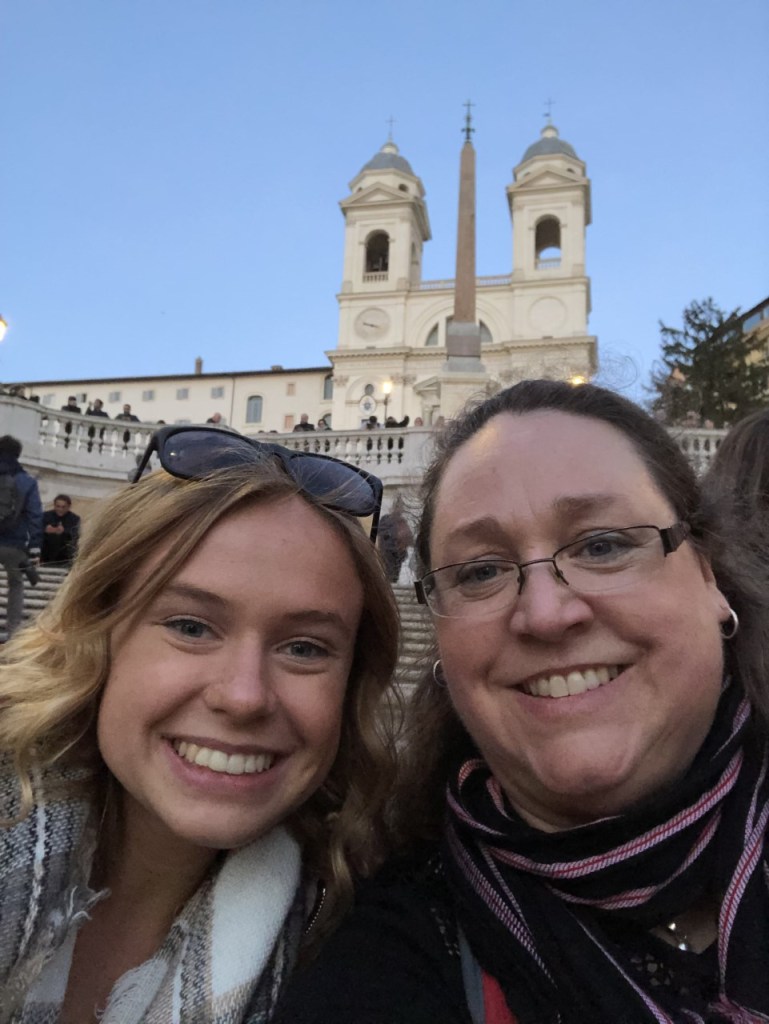
Exhausted, we ate a lovely pasta dinner near the Spanish Steps then dragged ourselves up to our little Airbnb. The Vatican Tour awaits us – tomorrow.
 The Literary Globetrotter